

The UK construction industry has always placed value on tradition. In many respects that caution has protected standards and safeguarded quality. However, there is a point at which tradition becomes habit, and habit becomes resistance to improvement. The phrase ‘traditional build’ continues to be used as a reassurance, yet in some cases it represents a reluctance to adopt methods that are already well proven elsewhere.
Clients expect buildings to be delivered faster, perform more efficiently and remain adaptable throughout the design process. At the same time, labour shortages, tighter regulations and unpredictable weather present ongoing challenges. Within this context, it is reasonable to question whether long-established site-led construction methods can consistently meet modern expectations.
At Black Sheep Homes (BSH) we have moved towards timber frame construction as a practical response to these pressures. This is not an experimental approach. Timber frame has been successfully used across much of Europe for decades and is supported by established engineering standards. The hesitation surrounding its wider adoption in parts of the UK is therefore less about technical capability and more about familiarity.
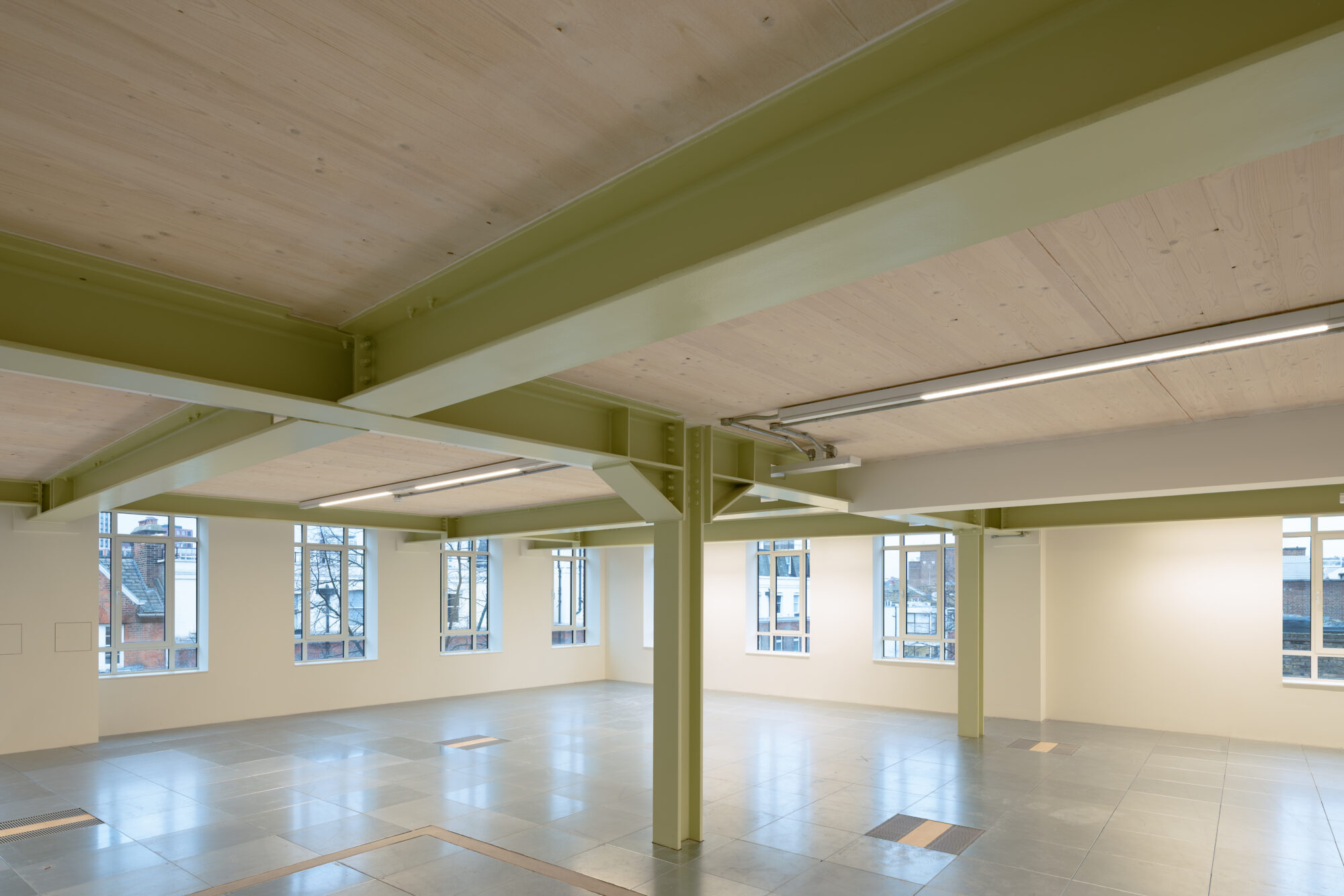
One of the most immediate advantages is programme predictability. Structural elements are manufactured in controlled factory conditions, ensuring dimensional accuracy and consistent quality before arriving on-site. Erection then becomes a defined installation process rather than a prolonged build-up of materials. A structure can reach a watertight stage significantly faster than masonry construction, allowing follow-on trades to begin earlier and giving clients tangible progress sooner in the programme.
Predictability also supports cost control. Shorter construction periods reduce preliminaries and site overheads, while fewer wet trades minimise delays associated with curing times and sequencing conflicts. In a sector increasingly affected by skilled labour shortages, systems that reduce dependence on large on-site teams offer clear operational advantages.
Performance requirements have likewise evolved. Achieving demanding airtightness targets, improved U-values and reliable acoustic separation is now fundamental rather than aspirational. The precision inherent in factory manufacture allows insulation and membranes to be installed accurately and consistently, reducing thermal bridging and improvingmeasured performance outcomes. Instead of relying heavily on-site conditions, compliance becomes designed into the structure itself.
Contrary to a common perception, system construction does not restrict architectural expression. Timber frame accommodates a wide range of façade treatments, including brick, render and cladding systems, enabling buildings to reflect local character while benefiting from modern construction standards. Externally, the building appears entirely conventional; internally, it performs to contemporary expectations.
Design development remains a reality on nearly every project, and changes rarely occur at convenient stages. Traditional construction can amplify the disruption caused by late alterations. Timber frame offers a practical advantage in this regard, as the material allows modifications to be implemented with comparatively less impact on the overall programme. Adjustments can be incorporated without disproportionate delay, maintaining momentum on-site.
The internal fit-out stage also benefits from the approach. Preformed internal wall panels allow first-fix trades to commence earlier and progress in a coordinated sequence. This reduces congestion, improves productivity and supports safer working conditions by limiting overlapping activities.
Perhaps most relevant to UK construction is weather resilience. Once the frame and roof are in place, the building quickly becomes dry internally. Work can then continue inside while external finishes proceed simultaneously, greatly reducing downtime caused by rainfall and improving programme reliability.
Timber frame should not be viewed as a departure from established construction values but as a continuation of them. The industry has continually evolved through improved materials, processes and understanding. When a method demonstrably delivers efficiency, performance and predictability, adopting it represents progression rather than risk.
The discussion is therefore no longer whether timber frame is viable, but whether maintaining exclusive reliance on traditional site-led methods best serves the needs of modern projects. Construction has always advanced by building on experience, and embracing proven systems is simply the next step in that evolution.