


Mark Councill and Alec Laing founded Logie Timber in 2017 with a shared vision to establish a sawmill to bridge the gap between small estate owners, private garden owners, larger forestry sites and the public.
“Our goal was to demystify hardwood timber processing,” says Mark, who was running a tree surgery business at the time. “Making it more approachable and less intimidating. We wanted to remove the barriers that often surround the industry, ensuring that anyone, regardless of their background or knowledge, could navigate the process with ease. I always envisioned it as the kind of place anyone with no experience in timber or hardwood production could visit, feel welcome and get all the information they need in a friendly, supportive environment.”
With around 82% of wood overall in the UK imported – and the figure is around two thirds for sawn timber – the need for increased amounts of homegrown timber entering the supply chain has never been higher. With Scottish woodlands so important to this aim, how can requirements be better prioritised to create a healthier and less import-led supply chain?
Increasing homegrown resource
“Although 82% of overall timber in the UK is imported, largely reflecting softwood imports,” says Mark. “When it comes to hardwoods, the percentage is significantly higher – well over 90%. This is a concerning statistic, and one we must address. It’s frustrating for a country with a rich natural resource base to rely so heavily on imports, especially when small companies like ours are committed to using only Scottish and UK-grown timber.
“One of the main challenges is consistency in quality across the industry. Currently, there is no standardised grading system for Scottish timber, which can lead to inconsistencies. A construction company might buy from a competitor and receive timber that doesn’t meet the required standards. This leaves them with a poor impression of UK timber, pushing them back to relying on imports.
“Establishing a unified standard for timber quality would go a long way in building trust and encouraging the construction industry to choose locally sourced timber over imports. Another key factor that could drive a shift towards UK-grown timber is the introduction of a carbon tax or some form of carbon-conscious purchasing. When you compare the carbon footprint of sourcing timber locally to that of importing it from places like Scandinavia, America, or even New Zealand, the benefits are clear. A shorter supply chain means significantly lower carbon emissions, making local timber an obvious choice.”
So, what can improve? Can our homegrown timber stocks provide enough timber for the domestic UK market and what are the blockers for the wider construction industry using more homegrown resource? “This is a challenging question because the exact figures aren’t clear,” says Mark. “I would hope that Scotland and the UK could one day produce enough timber to meet their own needs. However, with forest cover at only around 13-14% across the UK and 18-19% in Scotland, we’re significantly behind countries like Finland, where forest cover is an impressive 74%. Given these numbers, it’s unlikely that we currently have enough high-quality, usable timber to fully meet our needs, so it’s essential that we start working toward greater self-sufficiency in timber production.
Species diversification
“When it comes to structural timber, we tend to rely heavily on a few species, primarily Scots Pine and Spruce. While these are great for many applications, we should be exploring the use of other species, such as Douglas Fir and Hemlock, which could help diversify and stabilise the supply chain. By broadening the range of species used in construction, we can make better use of the forests we do have and reduce dependence on imports.”
A Mark points out, if we are serious about reducing our reliance on imported timber, we need to embrace innovation and look beyond traditional species. Combined with better forest management and planting initiatives, this will help the UK move toward a more sustainable and self-reliant timber industry. Of course, the timber material supply chain has been through many ups and downs over the last few years. Where have the pressure points been for Logie Timber?
“We’re in a unique position because of the diverse range of products we offer,” adds Mark. “Our line-up spans everything from hardwoods – like oak tabletops and elm skirting boards and shelving – to structural posts, beams, and large-scale cladding. This variety allows us to balance out the fluctuations in the supply chain. However, sourcing certain materials – particularly larch – has become increasingly difficult. The spread of ‘Phytophthora ramorum’, a disease that’s decimating larch trees across the UK, has made it much harder to get hold of.
“We have been working to shift demand toward Douglas fir as a viable alternative. All our structural posts and beams are now made from Douglas fir, and when we built a new shed on-site, we clad the entire structure in this timber. We’re also producing more Douglas fir planed cladding, and it’s proving to be a fantastic option. Of course, the rise in energy costs has impacted us, as it has across the industry and that has inevitably affected the pricing of our timber products.”
Sustainability is central to everything
Logie Timber takes its commitment to sustainability and reducing carbon footprint very seriously, with a range of measures in place at the sawmill and they are Grown in Britain certified. They are determined to showcase the value of homegrown timber and be carbon conscious.
“Sustainability is embedded in every part of our operation,” says Mark. “We have installed a 22-kilowatt solar panel system on one of our sheds, which powers our machines when they’re running and feeds excess energy back into the grid when they’re not. We’re planning to expand our renewable energy infrastructure with a larger solar panel system on another shed, and we’re looking to install a biomass boiler system to heat new drying kilns for the sawmill.
“The biomass system will be powered by our own wood chips – essentially recycling waste from our production process to fuel our energy needs. This combined heat and power system will generate electricity for our machinery and heat for the kilns. The surplus heat from this system will even be used to warm nearby cottages on the estate, further expanding our efforts to create a sustainable, circular approach to energy use.
“We are also committed to keeping our processes chemical-free. All our timber is untreated – there are no chemicals involved at any stage. Even the lubrication for our bandsaw blades is plant-based, rather than the diesel commonly used in the industry. This not only works as well, if not better, but also creates a healthier working environment. At every step, we’re working to reduce our carbon footprint as much as possible. Our efforts to minimise emissions aren’t just about meeting industry standards—they’re about creating a responsible, forward-thinking business that values the environment and works to protect it for future generations.”
What’s ahead in 2025?
With a growing shift toward using more homegrown timber in the future, Mark, Alec and the team at Logie Timber have big plans as they continue to consolidate current operations and success. Mark says: “In terms of our sawmill expansion, we have already made a significant investment in a brand new Mebor saw line and a new building, which has increased our production capacity. Looking ahead, we do have a couple of potential directions we’re considering. One option is to expand into creating structural timber frame kits that customers could easily assemble themselves. This would be a new product line that could add significant value to our business and provide a more accessible way for people to build with timber.
“We’re also exploring the possibility of setting up a thermokiln to produce thermally modified timber here in Scotland. Given the challenges we’re facing with larch, finding alternatives for untreated external cladding is critical. Thermal modification offers an excellent solution, as it enhances the durability and stability of timber without using chemicals.
As larch becomes more of a premium product, we need to have other sustainable options available, and thermowood is a promising alternative. While we have plenty of exciting ideas for the future, right now, our focus is on consolidating. We need to get everything running smoothly – refining our processes, ensuring quality and making sure all systems are working as they should – before we consider any further expansions.”
Logie Timber Festival 2024
The Logie Timber Festival took place on 7-8 September 2024, on the picturesque Logie Estate, near Forres. The goal for the festival was to inspire a love for timber, forestry, and woodworking, making it an engaging experience for everyone who attended. The Logie Team was thrilled about the event. “Over the course of the weekend, we welcomed around 2,500 to 3,000 visitors and showcased around 40 exhibitors, says Mark. “The festival featured a variety of engaging demonstrations, including timber harvesting, tree climbing for children, axe throwing, archery lessons with Bow Hunter Archery, as well as trying their hand at green woodworking with Aaron Sterritt.
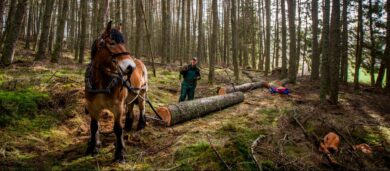
Festival goers had the opportunity to learn more about a range of organisations including the Highland Folk Museum, Forestry and Land Scotland, Mackintosh School of Architecture, and the Institute of Chartered Foresters. It also hosted talks from the British Deer Society and Grown in Britain, along with presentations from industry leaders such as Dan Ridley-Ellis from Napier University and Neil Sutherland of MAKAR. “These sessions provided invaluable insights into forestry and how we can encourage the use of homegrown timber. We had originally planned to hold the festival every two years, but given the enthusiasm and interest, it’s looking likely that we may return next year. Although nothing is confirmed yet, we encourage everyone to stay tuned for updates.”
More at: www.logietimber.co.uk