

Beyond targets and ambition, JELD-WEN’s 2024 Sustainability Report shows how sustainability is increasingly being embedded into everyday manufacturing decision making across the timber supply chain.
As sustainability reporting moves from a voluntary exercise to an expected part of doing business, manufacturers across the timber supply chain are under increasing pressure to demonstrate measurable progress – not just long-term ambition. From emissions and energy use to waste, sourcing and product transparency, customers, regulators and specifiers are asking harder questions about how timber products are made, not simply where they end up.
For large-scale manufacturers, this shift has sharpened the focus on operational performance. Reducing carbon, cutting waste and improving efficiency are no longer abstract environmental goals but commercial imperatives, particularly in a market where cost control, compliance and credibility increasingly intersect.
It is against this backdrop that JELD-WEN has published its 2024 Sustainability Report, released in 2025, setting out how the global doors and windows manufacturer is translating ESG commitments into practical action across its manufacturing footprint, including several sites supplying the UK timber market.
From reporting to delivery
JELD-WEN’s latest Sustainability Report charts a year of progress across its global manufacturing operations, with momentum in emissions reduction, waste elimination and responsible timber sourcing – areas under growing scrutiny across the construction supply chain.
Covering performance during 2024 and published in July 2025, the report confirms a 10% reduction in Scope 1 and 2 greenhouse gas emissions since 2021, driven by energy efficiency upgrades, renewable energy adoption and targeted operational investment. The figures point to sustainability becoming part of everyday manufacturing decision-making, rather than a parallel corporate exercise.
For a business whose core products include timber doors, windows and doorsets, the emphasis on reducing operational impact while strengthening product performance is particularly relevant. JELDWEN operates 79 manufacturing and distribution facilities across 14 countries, supplying both new-build and refurbishment markets.
Progress on the factory floor
While long-term targets – including net zero Scope 1 and 2 emissions by 2050 and zero manufacturing waste to landfill – set the strategic direction, the report places equal emphasis on near-term delivery. During 2024, JELD-WEN recorded a 12% reduction in waste sent to landfill year-on-year, alongside a 7% reduction in energy consumption.
Eight sites are now certified to the ISO 50001 energy management standard, reflecting a more structured, data-led approach to monitoring and reducing energy use. Across Europe, facilities have continued transitioning to renewable electricity purchasing, supported by efficiency projects and on-site generation.
A notable example is JELD-WEN’s Penrith facility in Cumbria, which has already achieved zero waste to landfill and now operates on 100% renewable energy. Biomass boilers fuelled by timber by-products allow manufacturing waste to be repurposed as a low-carbon energy source.
The site’s wider sustainability strategy has also been recognised through Cradle to Cradle Certified® Bronze status for selected door ranges, reflecting progress on material health, circularity and responsible sourcing.
Modernising manufacturing capacity
Alongside incremental improvements, the report highlights longerterm capital investment designed to lock in efficiency gains. In the UK, JELD-WEN is relocating its Sheffield operations to a new, purpose built facility at Bessemer Park, developed to support more sustainable manufacturing and improved operational flow.
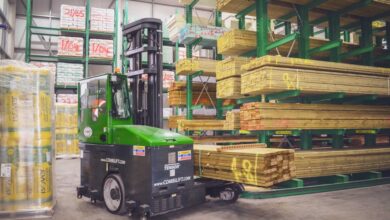
Elsewhere across the group, energy-saving measures introduced during 2024 included LED lighting upgrades, smart energy monitoring, more efficient process equipment and electrification of material handling fleets, delivering meaningful reductions in energy use while improving resilience against rising energy costs.
Responsible timber sourcing
Beyond operational emissions, the report places increasing emphasis on the origin and use of timber. JELD-WEN has committed that by 2030, 100% of wood used in production will be responsibly sourced in line with its Global Wood Sourcing Policy. As of 2024, 63% of suppliers were already compliant, with the remainder subject to ongoing engagement and transition plans.
The report also provides greater transparency around certified and recycled content. At the Penrith site, fire doors now contain an average of 92% recycled or renewable material, while hollow-core doors achieve around 90%, reflecting the use of recovered wood fibre and internal by-products. Across Europe and North America, JELD-WEN maintains FSC and PEFC chain-of-custody certification, supporting traceability for specifiers and merchants operating under increasingly stringent procurement requirements.
Product performance and compliance
Alongside sustainability metrics, the report reinforces the importance of product performance, safety and certification, particularly in regulated sectors such as fire doors. JELD-WEN continues to invest in testing and third-party certification to ensure compliance with evolving standards.
The introduction of digital data pin technology within Certifire doorsets provides instant access to certification, installation guidance and inspection records, improving traceability and supporting compliance under tighter fire safety regimes.
People and governance
The report also highlights progress on workforce safety and governance. In 2024, JELD-WEN recorded a 5% reduction in lost time injury rate, supported by training, leadership programmes and site-level safety initiatives. In the UK, this focus was recognised with a Health and Safety Award at the 2024 British Woodworking Federation Awards.
At group level, emissions data for Scope 1 and 2 is externally assured, with board-level oversight and ESG governance structures intended to strengthen accountability and transparency.
A wider lesson for the timber sector
For Timber Trader readers, the value of the report lies less in headline targets than in the practical detail behind them. From biomass systems fuelled by timber waste to higher recycled content in doorsets and structured energy management at site level, the report shows how sustainability commitments translate into manufacturing reality.
As environmental scrutiny intensifies across the timber supply chain, JELD-WEN’s 2024 Sustainability Report offers a clear case study in how established manufacturers are responding with measurable, operational change.