


With sustainability a key focus for the construction industry, finding ways in which products can be manufactured in a more environmentally conscious way is vital. When looking at the climate crisis we currently face, reducing waste is a key part of reducing our impact on the environment. Within this, there are three main areas to focus on, commonly referred to as the Three R’s: Reduce, Reuse and Recycle. Recycling is an extremely important aspect of this process and is key to ensuring a circular economy, as well as reducing the amount of waste material taken to landfill.
Timber is a perfect example of such a recyclable material, able to be easily recycled and reused over and over again, all while retaining its strength and value over time. As our founder Fritz Egger Senior once said: “Wood is far too valuable to just throw away,” a sentiment which rings true to this day.
Improving construction habits
As a leading manufacturer of timber-based structural floorboards, and the largest user of recycled wood in the wood panel industry, we are always looking for ways to improve the sustainability of our products, in turn helping our customers to meet their environmental goals. One of the ways we do this is through the use of recycled materials.
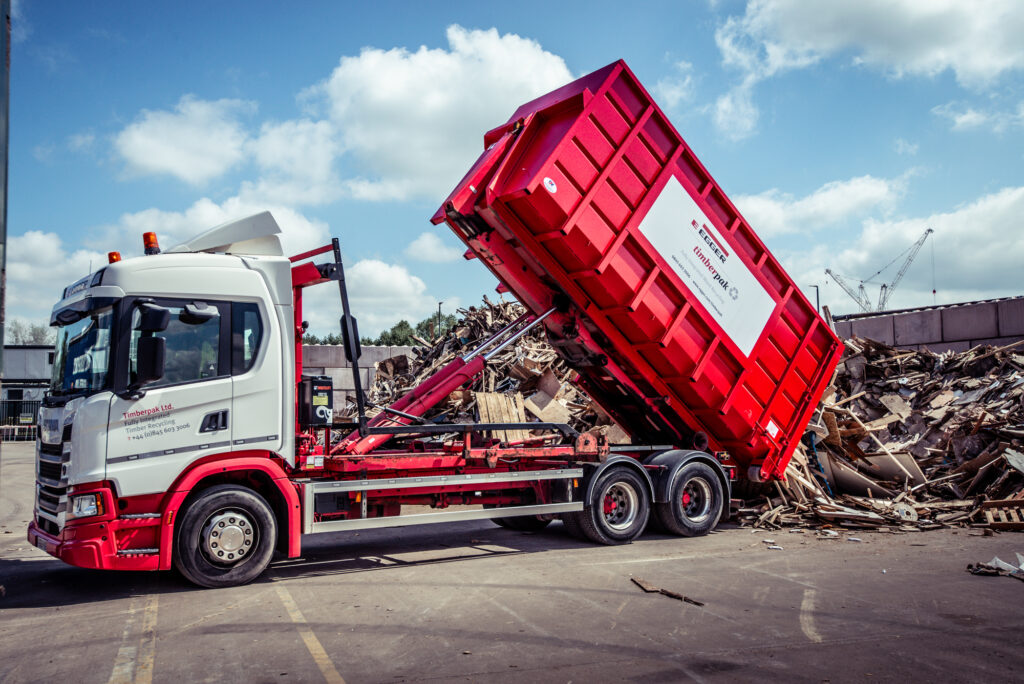
Through EGGER Timberpak, a recycling subsidiary of EGGER, we are able to source our waste wood requirements. For over 20 years, Timberpak has sourced waste wood for our chipboard production site in Hexham, Northumberland, which produces our structural flooring boards, used by housebuilders across the country. Due to recent expansions and significant investment, Timberpak has opened a brand-new recycling super site in Leeds, further increasing the recycling ability we possess.
EGGER has invested over £30million into our UK recycling operations in the last two years. This new six-acre site will increase the amount of recycled material processed by Timberpak to 150,000 tonnes per year, with the potential for this to increase by a further 50%, as the demand for wood-based recycled material continues to grow. The new state-of-the-art site offers some of the best wood recycling facilities in the UK, featuring a bespoke loading pit offering safe and efficient loading. While the streamlined layout of the shredders, picking stations and stock system will further reduce handling time. A new weighbridge and loading bay have also been installed, and weight tickets and delivery documents are paperless.
A sustainable approach has been taken at every opportunity during the site’s fit-out, including over 1,200sq m of solar panels and a dust suppression system. Health and safety is another top priority, with thermal cameras installed for stock heat control and a one-way traffic management system in place.

Future-proofing material supply
Not only will the new site increase our capacity and help future-proof the business, but it will also further improve the high-quality customer service we pride ourselves on. This investment reinforces our commitment to ‘make more from wood’ and is something that will benefit generations to come, by continuing to store the carbon absorbed by the recycled wood during its growth. Additionally, thanks to these developments, we are now even better placed to handle waste wood from the construction, manufacturing and waste industries. This means we can now create even more sustainable products, which can then be installed and recycled at their end of life, closing the loop.
EGGER has also recently commissioned a new recycling plant at our Hexham site, with the aim of increasing the level of quality recycled content to over 50% in our chipboard panels. Of course, not all wood material will be suitable for recycling and reuse in production. However, that doesn’t mean it has to go to a landfill site. At our Hexham factory, we burn the waste material that we can’t recycle or reuse to fuel the energy plant itself. By burning this unusable residue rather than natural gas, we can save around 67,000 tonnes of CO2 every year – an incredible environmental saving.
No matter the individual efforts of manufacturers, for real change to be made all those within the construction and manufacturing industries must step up and do their bit in making a difference. In the fight against climate change, everyone has a joint responsibility to review the ways in which they operate and the opportunities they have to recycle and reduce the amount of material wastage created. It is this commitment that will ensure a more stable and circular economy for future generations.
More at www.egger.com