

As the STA, TDUK and Confor jointly grasp the reins to deliver the Government’s Timber in Construction Policy (TiC) Roadmap, we hear from Andrew Carpenter, STA CEO on what’s next in the implementation of this crucial strategy.
The TiC roadmap – published by the Department for Environment, Food and Rural Affairs (DEFRA) in December last year – is the culmination of many months of collaboration between Government and industry and sets out a framework for increasing the use of timber in construction. Having already worked together as key contributors to the development of the policy document, the STA, TDUK and Confor were recently appointed joint secretariat of the TiC working group, in a bid to expedite delivery of the policy goals.
Crucially, the secretariat is tasked with leading the development and implementation of solid plans to meet each of the seven key priorities identified within the roadmap, which cover demand, supply, building safety, labour and skills, carbon, insurance and innovation. And while there is an element of uncertainty now in the political landscape with the impending (at the time of writing) General Election, we’re confident that any potential change of Government will not interfere with the direction of travel. Increasing the use of timber in construction is an absolutely vital component of the UK’s net zero agenda.
Key responsibilities
As we move into the delivery phase of the policy roadmap, we have established working groups for each of the seven key priorities, which will take responsibility for driving forwards the 51 critical projects identified by DEFRA. Some of these projects are industry focused, while others are for Government to undertake. However, it’s possible to distil these down to four primary objectives that underpin everything we are doing. These are:
• To safely increase the amount of timber used in construction
• To increase the amount of homegrown timber used in construction
• To help the UK meet its net zero target by 2050
• To grow the economy through decarbonisation.
This truly is the opportunity of a lifetime for the timber sector, however it’s important that we bear in mind the needs of the construction industry, as they are our client and will influence the outcome of this policy. Therefore, our efforts must be aligned with key industry guidance, such as the Construction Leadership Council’s nine targets for construction to reach net zero by 2050. One of these targets is to optimise the use of Modern Methods of Construction (MMC), while another is to design out carbon – clearly there is a huge opportunity for the timber sector to fill this space.
Delivering 3 ‘Ps’
I believe that the best way for the UK timber sector to align with the construction industry’s needs is through what I call ‘The 3 Ps’ of Partnership, Procurement and Productivity. Starting with Partnership, this is about fostering collaboration throughout the entire supply chain – from Government, through forestry and sawmills, into manufacturing, design and erection. Only with an integrated supply chain, with common aims, goals and objectives, will we be able to achieve the results we need.
Looking at Procurement, this requires a shift in mindset, moving away from the current approach that focuses primarily on the lowest price. Changing mindset is no mean feat, however, and will require the Government to lead the charge – perhaps looking to the French example which requires mandatory timber inclusion in all public projects. That being said, positive steps are being taken in this direction with the implementation of the Procurement Act 2023, which includes a push towards using more SMEs and requires local authorities to consider social and environmental value in their purchasing decisions.
Finally, Productivity is about demonstrating that timber is a viable and long-term solution. We need to prove the business benefit and show that we have the capacity to deliver. One way to do this is to examine the way we conduct our own businesses – are we collaborative? Are we working together? Are we adopting better procurement policies?
However, it’s not all just about carbon – timber brings a host of other business benefits too. For example, health and wellbeing is a major factor and it’s generally recognised that timber has huge aesthetic potential and can deliver a sense of tactile warmth that’s not easily achieved by other materials. What’s more, with skills shortages throughout the construction industry, timber has a role to play in modernising the industry’s image. Attracting young people into a job that is largely conducted on wet and windy building sites could perhaps be a challenge, but with the increase in timber-based MMC and offsite construction, a host of new careers requiring different skill sets is opening up.
Finally, I truly believe that the younger generations – growing up in a society that is acutely aware of the climate crisis – are looking for more than just a salary. They want a sense of purpose, a feeling that they are contributing to the bigger picture for the benefit of all. It is this sense of purpose that we, the timber sector, must seek to foster across all levels of the supply chain if we are to achieve the results we are seeking. The TiC roadmap is the blueprint but it’s down to us to work together in delivering it.
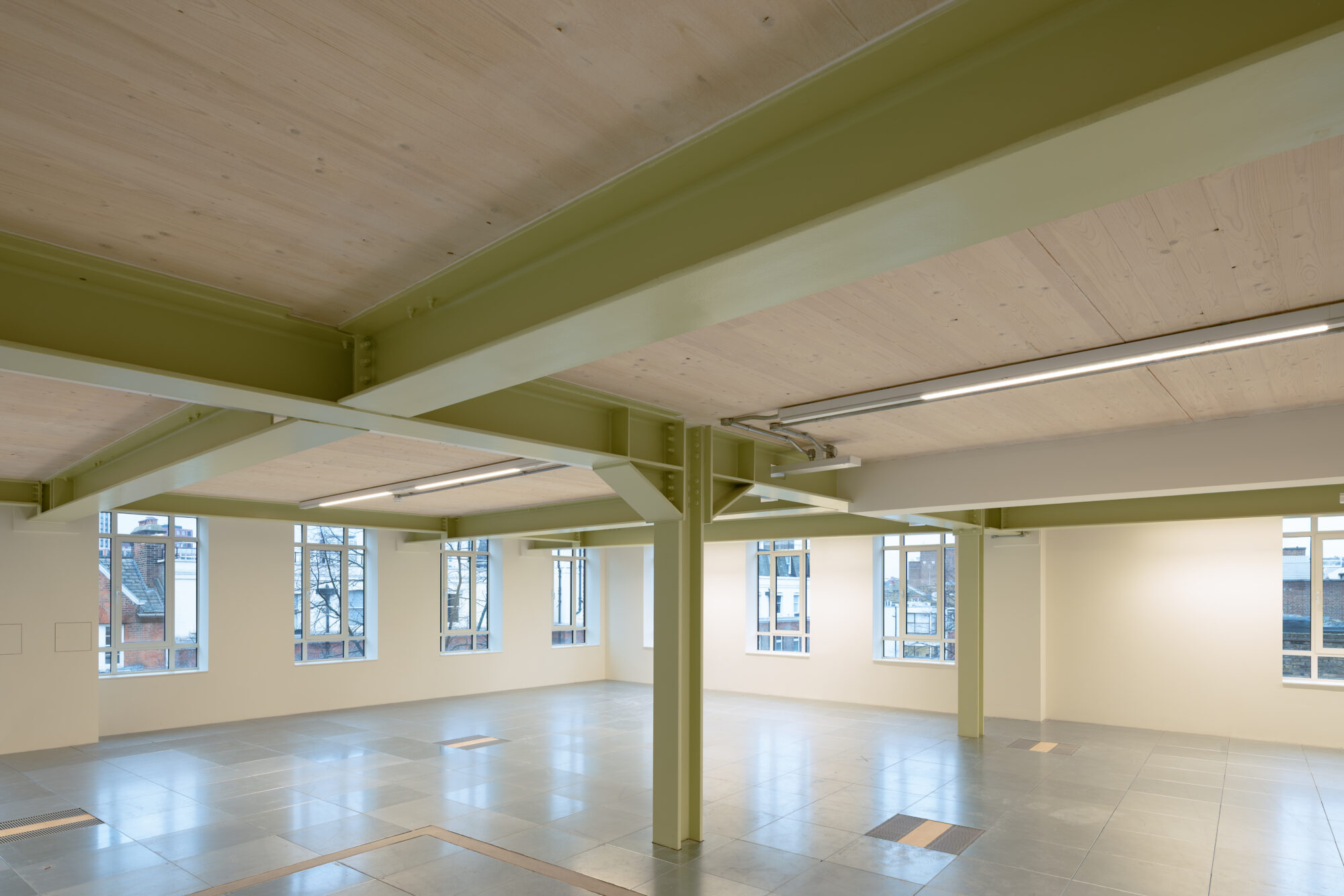
Image: The role timber has to play in our net zero future is hugely significant