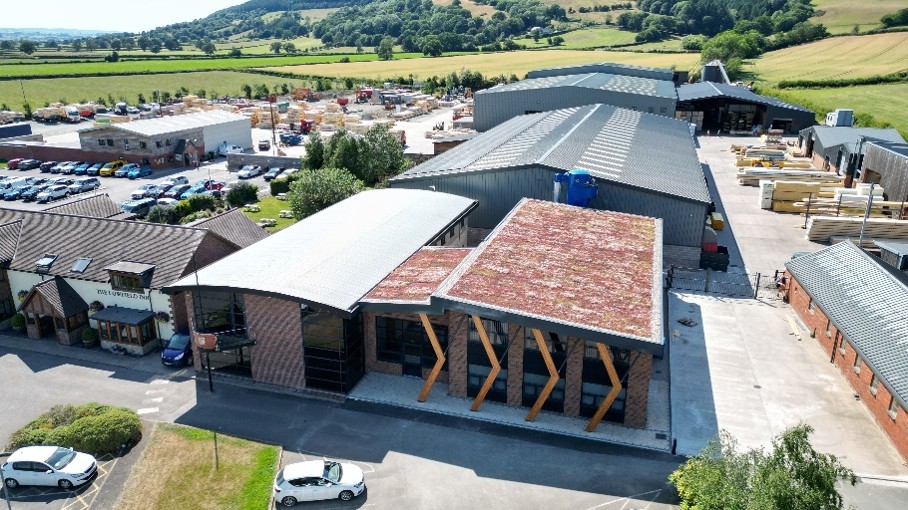


The construction industry is facing an unprecedented challenge when it comes to skills. Alex Goodfellow, CEO at Donaldson Offsite, explains how Donaldson Timber Systems (DTS) is using targeted training to address the crisis.
With experienced tradespeople retiring faster than they can be replaced and school leavers drawn to careers elsewhere, the skills and labour gap is widening at an alarming rate. According to CITB figures, the construction industry needs to bring in more than 280,000 new workers over the next three years just to keep up and build the government target of 1.5 million much-needed new homes. That’s a huge ask – especially in a market where skilled labour is already in short supply.
The scale of the skills challenge requires solutions that go beyond traditional recruitment. We all need to think outside the box for this – developing partnerships between industry and education, creating roles that inspire young people, and pushing initiatives that attract talent from other sectors to create the diverse, multi-skilled workforce the industry desperately needs. The future success of housing depends not just on filling vacancies, but on fundamentally rethinking who works in the industry and what skills they bring.
The changing face of timber careers
Walk into a modern timber frame facility today and you’ll encounter roles that didn’t exist a decade ago – from sustainability managers analysing lifecycle carbon impacts, to digital specialists overseeing automated production lines. These emerging industry ‘personas’ represent a major shift.
Technology is advancing rapidly, with increasing digitisation and AI adoption transforming manufacturing roles, while more technologically advanced robotics and machinery are changing the skills and expertise the sector requires.
Last year we invested more than £10million in robotics and performance upgrades at our factory in Oxfordshire, to expand capacity and technical capabilities for more advanced, energy-efficient buildings.
When we upgraded the factory, we changed our recruitment strategy. As well as hiring colleagues with timber experience, we also actively looked to hire people with a background in the automotive and engineering sectors. These cross-sector recruits bring fresh perspectives and transferable skills that enhance team capabilities, create efficiencies, and ultimately increase production capacity. It also enabled us to redeploy some of our skilled people to more value-added roles, increasing personal growth and development opportunities.
The increased automation created by the new robotics has reduced the manual labour required on the factory floor, which has also made our manufacturing technician positions less physically demanding. The knock-on effect is that factory experience has changed beyond recognition, making it a more attractive proposition for a wider range of people looking for a place to work.
Attracting a new generation
Looking inside and outside the sector has been core to our strategy over recent years in a bid to attract a wider range of skills and applicants. In 2022, we developed a training initiative for contracts supervisors and managers to attract younger employees into contract management roles. The programme takes them through a series of experiences to understand timber frame manufacturing, particularly the site management side of the business. Six individuals have since been through this programme, bringing diverse perspectives and new skills.
We’ve also had great results with strategic educational partnerships. Since 2018, the DTS team has collaborated with West Herts College, supporting the Level 2 Site Carpentry & MMC apprenticeship course, creating a bespoke programme specifically designed for timber frame construction.
The partnership extends far beyond theoretical learning. We provide hands-on workshops and have constructed a timber frame demonstration unit at the college, allowing students to see, touch, and interact with the materials and techniques they’ll use in their careers. This multi-sensory approach – combining audible, vocational, kinetic, and visual teaching methods – maximises engagement and retention.
The results speak for themselves: a 100% success rate with all apprentices completing the course and securing employment. The 2.5- year programme combines four days of on-site work experience with one day of college-based learning, including specialised MMC modules covering construction technology, health and safety, and timber frame build systems.
These initiatives represent more than just training programmes – they’re investments in the industry’s future. The ability to enhance learners’ understanding of timber frame and MMC creates a win-win situation for all stakeholders.
Taking control
Improving learning is important not just for our people, but also for our customers. To understand how to get the most out of offsite timber frame, housebuilders and contractors must also be fully equipped with knowledge and capability.
In recognition of this, we’ve recently launched a bespoke online training programme to develop a workforce capable of building using offsite timber frame. It spans every discipline – from design and technical through to commercial and construction – and is designed to help our customers unlock timber frame’s full potential: reduced costs, faster build times, and superior performance.
With backing from CITB’s Industry Impact Fund, this industry-first initiative addresses a critical need. For housebuilders and contractors looking to transition to timber frame, the knowledge gap can be daunting. By opening up our expertise through this programme, we’re not just training individuals – we’re helping to build capacity across the sector and accelerate the industry’s shift towards more efficient, sustainable building methods.
Ultimately, the future of timber frame construction – and the wider housing sector – depends on the skills, confidence, and commitment of the people who deliver it. By working together, we can raise the whole sector – closing the skills gap, accelerating timber frame adoption and building the workforce and homes of the future that we so desperately need.