


Building with timber and other biobased materials offers a significant opportunity to lock carbon out of the atmosphere and to clearly demonstrate climate action. Now, for the first time, BSCQ can prove this. The certification has been developed in direct response to the UK Government’s Timber in Construction Roadmap and Wales’s Timber Industrial Strategy, and with the support of Timber Development UK, Bangor University, the Forestry Commission, Welsh Government and Scottish Forestry.
Making the invisible, visible
Current whole-life carbon frameworks, do not provide net credit for biogenic stored carbon. They assume it is eventually released, so the long- term climate value of a timber building – the carbon locked into its structure for decades – simply disappears from project reporting. BSCQ changes that by treating stored biogenic carbon as a distinct, reportable metric, separate from embodied carbon. The practical upshot is significant. Every project specifying biobased materials is already storing carbon. BSCQ makes that contribution visible and commercially viable with an independently certified figure. To demonstrate the scheme’s scope, two projects spanning different building typologies are among the first to be certified:
Vernon Stockton Seed Centre, Delamere, Cheshire
Delivered by Willmott Dixon with GiB certificate-holder Buckland Timber, Forestry England’s seed processing centre at Delamere was designed around a large column-free workspace, solved through 18m curved glulam beams with cross laminated timber (CLT) panels spanning between frames. Clad in GiB larch and formally opened by Forestry Minister Mary Creagh, the building was shortlisted for Project of the Year at the 2025 Structural Timber Awards. BSCQ certified score: 614,030 kgCO₂e / 614 tCO2e
Gwynfaen Housing, Penyrheol, Swansea
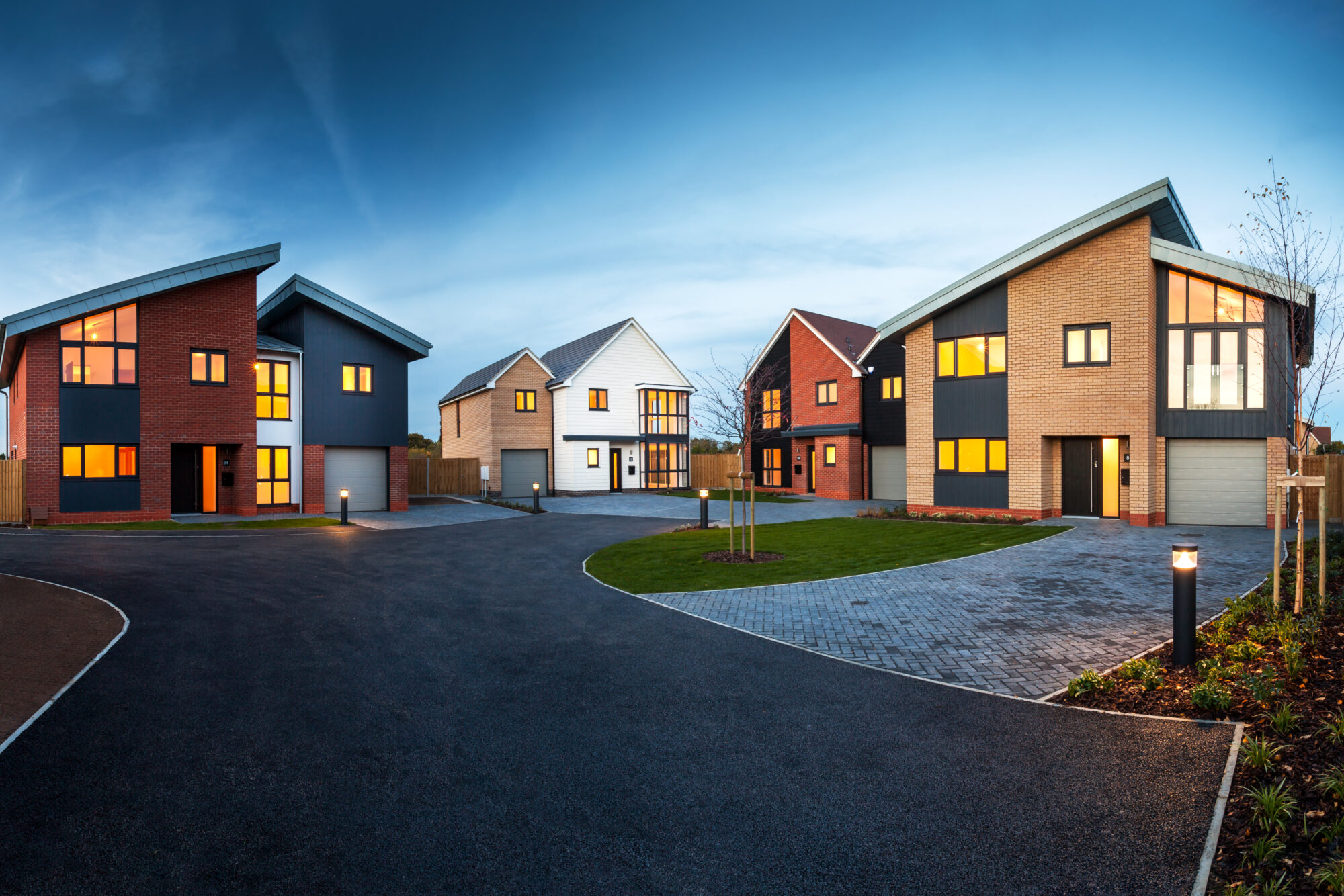
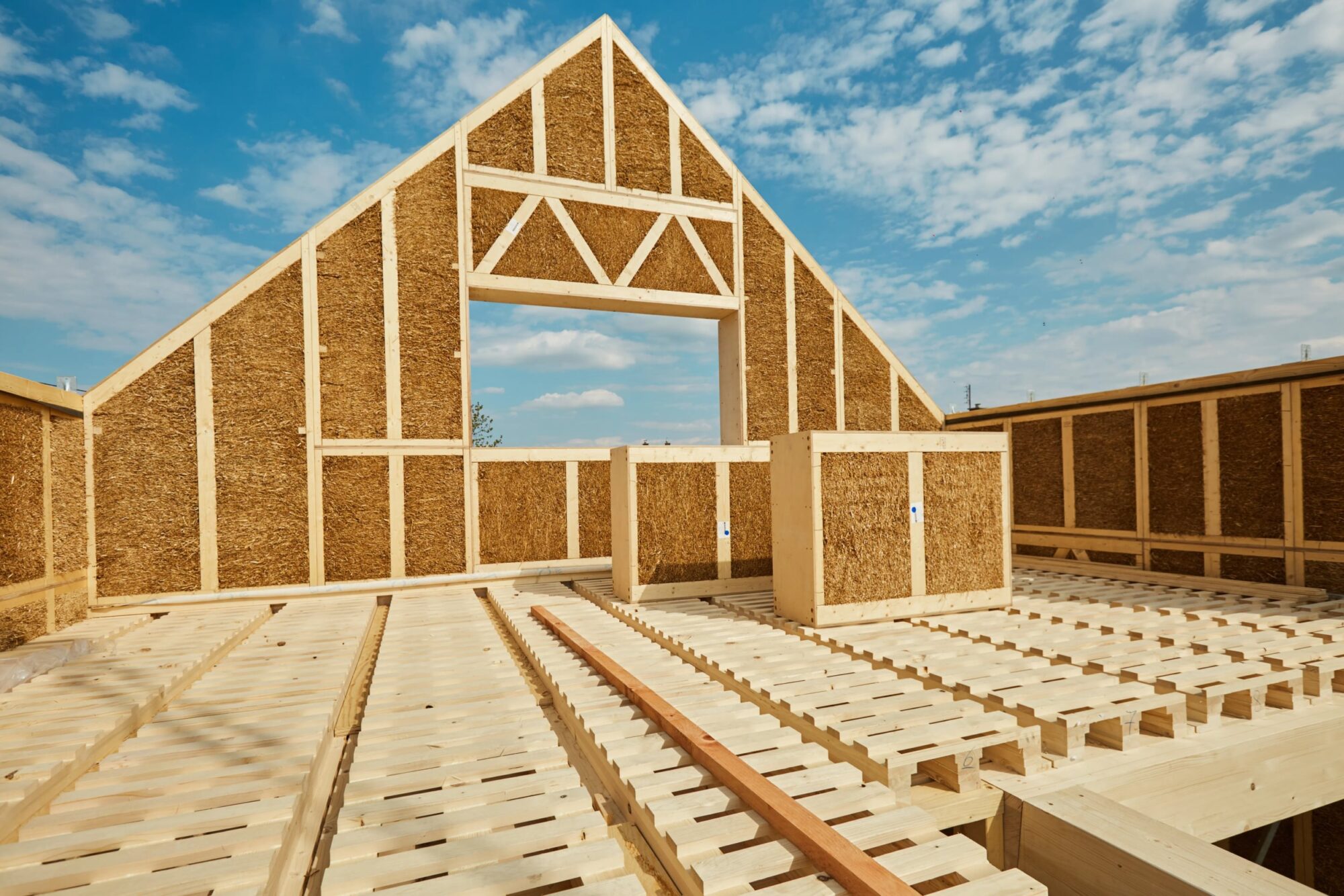
Designed by Stride Treglown for Pobl and the Welsh Government, Gwynfaen comprises 144 affordable timber frame homes on the edge of the Gower Peninsula. Using modern methods of construction (MMC), the project uses a kit-of-parts approach – pre-insulated wall, floor and roof panels from C16 timber with blown wood fibre insulation – reducing embodied carbon, cutting waste and shortening supply chains. Winner of Best Development and the Structural Timber Pioneer Award, the project is due for completion in July 2026. “This scheme will clearly demonstrate the positive environmental impact of projects like Gwynfaen. The biobased material choices not only provide healthy places for people to live but act as a long-term carbon store for decades to come,” says Justyna Wilkinson, Associate Architect, Stride Treglown. BSCQ design-phase application submitted: 3,480,635 kgCO₂e / 3,480.6 tCO2e
What BSCQ means for your projects
Any project specifying timber or other biobased materials (straw, hemp, wool, etc) can apply. A provisional BSCQ score is available at design stage – meaning the carbon contribution of your material choices can be quantified before a spade goes in the ground. Certified scores strengthen tender submissions and ESG reports, provide an auditable basis for environmental claims – reducing greenwashing risk – and position projects for potential carbon credit mechanisms on the voluntary carbon market. BSCQ is aligned with the EU Carbon Removals and Carbon Farming framework.
Every BSCQ-certified project must include an element of GiB-certified UK timber – the only certification that verifies provenance – alongside Category A status under the UK Government’s Timber Procurement Policy.
To find out more visit: www.growninbritain.org/biogenic-storedcarbon-quotient-certification or email:
[email protected]
Read more in the latest Structural Timber magazine here