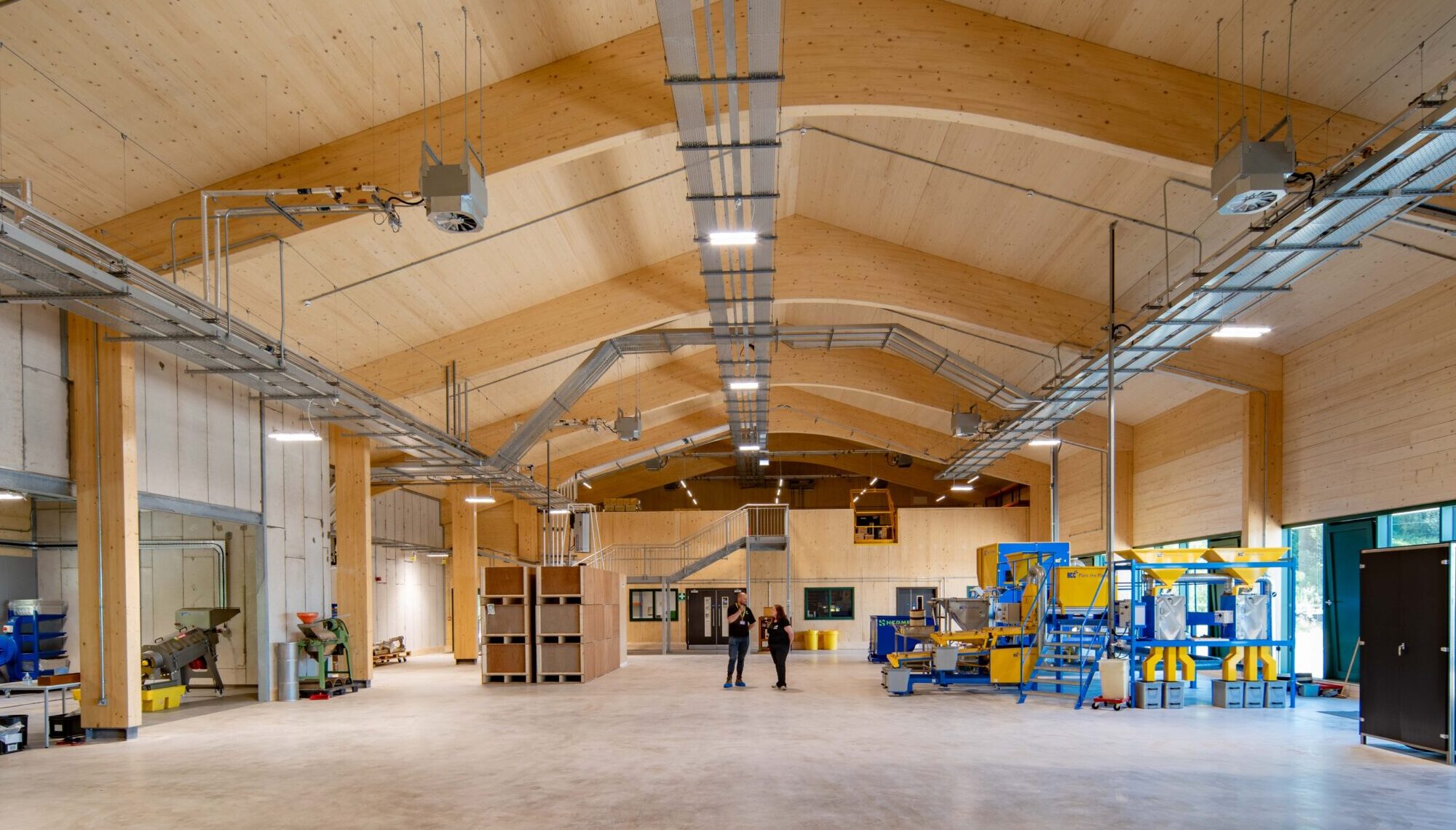


The UK is grappling with a housing shortage while also needing to reduce carbon emissions from the building sector to achieve net zero. Fast, low-impact timber frame construction offers a way to tackle both issues.
The urban development organisation, Centre for Cities, estimates that after years of lagging behind comparable economies in housebuilding, the UK now faces a shortfall of 4.3 million homes.
The Labour government has committed to delivering 1.5 million homes over the next five years. At the same time, the sector must ensure these homes are more sustainable if the country is to have any realistic chance of meeting its 2050 net-zero target.
Bio-based building products are the future
With pressure to build more quickly and sustainably, there is growing agreement across the construction industry and among policymakers that bio-based materials, particularly timber, should play a larger role.
According to the UK timber frame sector body, the Structural Timber Association, timber construction brings a range of environmental advantages. Unlike energy-intensive, finite materials such as steel and concrete, timber is renewable. It also absorbs CO₂ as it grows and stores it throughout the lifespan of the product.
This creates the potential for the built environment to act as a significant carbon store, while timber’s natural insulating properties also support the delivery of energy-efficient homes.
Timber frame – the high-speed route to meet housing needs
The conference also emphasised speed of construction as a key advantage of timber. Its strength and lightness make it easier to work with than steel or concrete, while also offering greater flexibility on site. In Scotland, where challenging weather conditions shorten construction windows, timber frame accounts for more than 90% of new-build housing. The need to achieve a weather-tight structure quickly has made it the default choice.
Shorter build times also translate into cost savings, an important consideration as the industry looks for more affordable solutions without sacrificing quality. Alongside timber frame’s ‘seamless alignment’ with updates to Part L of the Building Regulations on U-values and carbon performance, it provides a simpler, more cost-effective route to compliance than traditional brick-and-block construction.
Government looks to unlock timber frame construction potential at scale and speed
The UK government clearly recognises the benefits of increased timber use. In collaboration with industry and academia, it has developed the Timber in Construction Roadmap, updated in early 2025. This strategy focuses on boosting domestic timber supply while expanding the capacity of the timber construction sector to use it. The anticipated benefits span environmental, economic, and social outcomes.
The roadmap also highlights that, while timber frame dominates in Scotland, it remains underutilised elsewhere in the UK, presenting an “opportunity to unlock this industry at scale and at speed”.
To support this, the government is investing £10 billion in offsite and modular construction to expand its use in public buildings. As part of this initiative, the Crown Commercial Service has selected 29 companies for its offsite construction framework to deliver prefabricated modular buildings for government use, including social housing, schools, and healthcare facilities.
Product innovation to accentuate timber frame construction’s advantages
New products and technologies are emerging to further strengthen the benefits of timber construction and support market growth. Factory-applied solutions, such as the resin-based Arctek® Dryshell™, provide a weather-resistant barrier for OSB and other wood-based panels. Designed to enhance build quality and efficiency, these innovations help maximise the performance and practicality of timber frame systems.