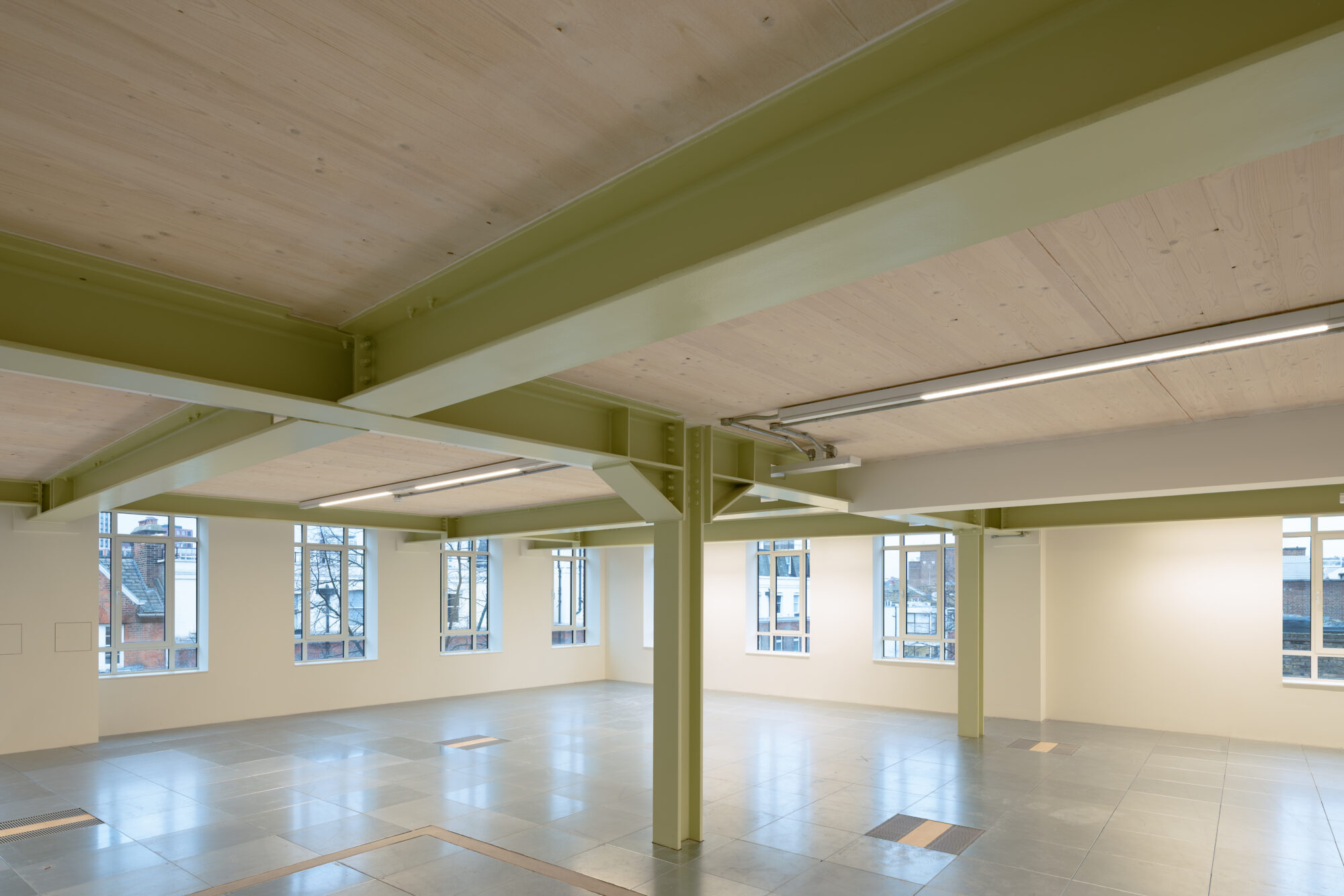


The Mineral Products Association (MPA) has criticised the government for being “disproportionately partisan” toward timber construction, despite concerns over fire safety.
In a statement, the body, which represents the aggregates, concrete and related industries, argued that the government’s recently updated Timber in Construction Roadmap contained overly optimistic assumptions about timber’s sustainability credentials.
The MPA pointed out that this stood in contrast to the government’s steel strategy, which acknowledged challenges faced by the steel industry, such as high energy costs and carbon leakage.
Chris Leese, chair of the MPA’s executive management committee, stated: “Given that the timber roadmap plainly states that timber is combustible and can contribute to the spread of fire, it’s frustrating and perplexing that government seems so keen to support using more of it.”
“Even more so with unresolved questions around how to prevent further global deforestation, when the UK is already the third largest timber importer in the world and how to tackle the problems of water damage and durability that have deterred insurers.”
The association has called for minerals and mineral products to be recognised as an essential foundation sector in the government’s upcoming industrial strategy.
The steel strategy, currently open for consultation, outlines measures to boost demand for domestic steel and protect the industry from threats such as carbon leakage, global market overcapacity and unfair trading practices.
Diana Casey, the association’s executive director for energy and climate change, said the risks identified in the steel plan would be “worryingly familiar” to those working in the cement industry, which faces similar existential challenges.
“Cement was recently identified as the UK’s most vulnerable sector to carbon leakage, which effectively shifts emissions to countries with weaker climate policies,” she stated.
“We’re not in the same position as steel, yet, but we’re on the same trajectory, with the same uncompetitive industrial energy costs.”
Casey emphasised that the government should aim to reach 2050 with a stronger, decarbonised industrial base that leverages the UK’s natural strengths, such as engineering expertise, mineral resources and carbon storage capacity.
“But instead, they risk killing off another foundation sector as other countries support their own industries to a greater degree than we do here,” she added.
Robert McIlveen, the association’s senior director for communications and public affairs, noted that the emerging government industrial strategy focused on sectors with high growth potential, where minerals play an integral role.
“But that seems at odds with the lack of government support for UK cement producers as they continue to decarbonise, certainly compared to steel, while support is offered by the government for timber in construction when the UK is already a huge net importer and any growth would take decades to realise,” he said.
However, the government’s stance on materials was welcomed by other trade associations, with UK Steel expressing optimism that the steel strategy would help the sector tackle major emerging issues.
“[It] marks a significant commitment to tackling the key challenges facing our industry, including high electricity costs, unfair trading practices and the need to strengthen domestic scrap steel recycling, with Trump’s tariffs being the latest in a number of international trade and competitiveness hurdles,” the association stated.
The Timber in Construction Roadmap’s commitments were praised by Timber Development UK as a “real boost to the low-carbon construction sector.”
“Increasing the use of structural timber and offsite manufacturing is one of the most effective ways of ensuring the rapid and high-quality delivery of these vitally needed homes, while also meeting urgent decarbonisation obligations,” said chief executive David Hopkins.
Original source: Construction News