

As the UK construction sector faces mounting pressure to decarbonise, a groundbreaking research initiative has demonstrated that England’s underutilised deciduous broadleaf forests could play a central role in delivering low-carbon buildings and strengthening domestic supply chains.
A three-year project, funded by the Forestry Commission’s Woods into Management Forestry Innovation Fund, brought together leading experts from forestry, wood science, timber manufacturing, architecture, and construction to explore how English-grown timber can be used more effectively in modern building systems.
Driven by the New Model Institute for Technology and Engineering (NMITE), and with key contributions from academic and industry partners including Edinburgh Napier University (ENU), Built Environment–Smarter Transformation (BE-ST), Ecosystems Technologies, and dRMM Architects, this has seen a collaborative report titled ‘Building from England’s Woodlands’ (BFEW) offers a transformative roadmap.
“England’s woodlands are a national asset with the potential to play a vital role in addressing the climate emergency,” said David Bole FICFor, Head of Green Economy & Skills, Forestry Commission. “By unlocking the potential of our forests, we can reduce reliance on imported and carbon-intensive materials, support healthier and more resilient woodlands, and create new opportunities for sustainable growth across the forestry, manufacturing and construction sectors.”
Given the current heavy reliance on imported softwoods and carbon-intensive materials like steel and concrete, this initiative demonstrates the potential of homegrown timber for moving toward a localised, circular, and climate-resilient construction economy. A key emphasis of this project was to showcase the art of the possible, and to test and learn from it to positively influence future UK forest management practices.
The Core Challenge: rethinking England’s forest resource
While 77% of England’s woodland area consists of broadleaved tree species (such as oak, ash, birch, beech, sycamore, sweet chestnut, alder, and poplar), many of these hardwoods are historically overlooked for structural applications. Instead, roughly 85% of the UK’s hardwood harvest is burned for energy, while the construction sector relies heavily on imported softwoods (importing 68% of its sawn timber).
At the same time, the UK built environment is responsible for roughly 25% of the nation’s carbon emissions. To meet the UK Government’s ‘Timber in Construction Roadmap’ objectives and reach net zero targets, the industry must rethink how it sources and utilizes raw materials. The BFEW report proposes that better buildings can support better forests. High-value structural markets for hardwoods, can incentivise landowners to plant diverse, climate-resilient mixed forests rather than a small range of conifers.
Data on mechanical properties of English hardwoods
To counter the misconception that homegrown hardwoods are unsuitable for construction, researchers at Edinburgh Napier University conducted over 2,000 mechanical properties tests on small clear specimens across key species. The findings revealed that many English hardwoods have sufficient bending strength, stiffness, and density required to act as a suitable alternative to standard imported softwoods for construction purposes. Notably lesser used species like birch, ash, and sycamore demonstrate a good balance of structural capabilities that make them prime candidates for a range of construction applications including opportunities to be used in hybrid form.
“One of the greatest successes of this project has been bringing together expertise from across the forestry, manufacturing and construction sectors to solve shared challenges,” said Professor Robert Hairstans, Director of the Centre of Advanced Timber Technology NMITE & Head of the Centre for Offsite Construction & Innovative Structures, Edinburgh Napier University. “The structural testing has given us greater confidence in the capabilities of English hardwoods, while the collaborative approach has helped turn research findings into real-world applications. This demonstrates how innovation, when supported by strong partnerships, can unlock new opportunities for sustainable construction and healthier, more resilient forests.”
Exploring hybrid engineered wood products
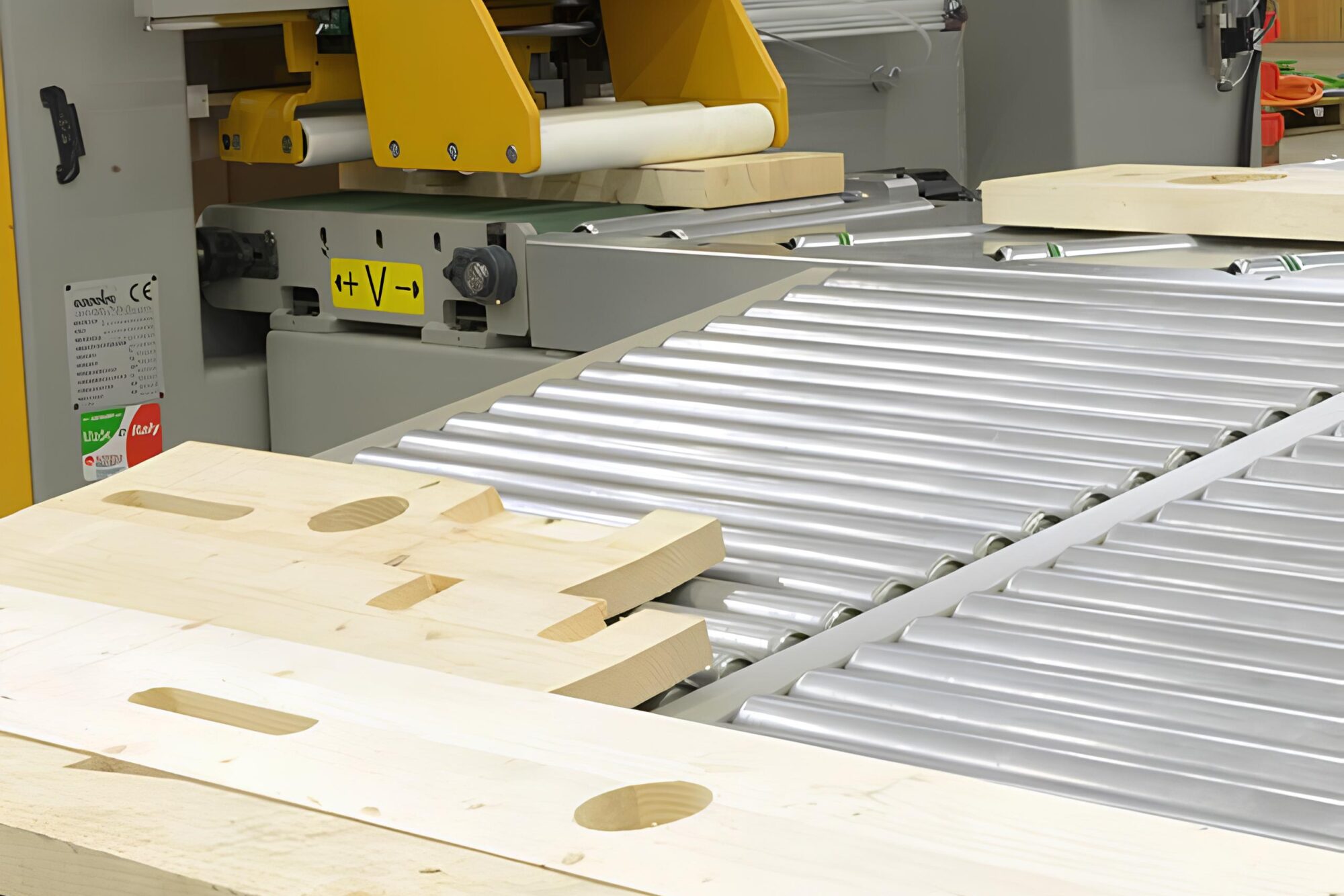
Recognising that softwoods will remain the bulk of construction timber usage, the BFEW project pioneered hybrid engineered timber systems that use hardwoods components to add value. This is of particular relevance given the relatively small volume of availability and requirement to diversify species use. By strategically combining fast-growing UK-grown softwoods in lower-stress core zones with high-performing English hardwoods at structural ‘hot spots’ (such as the outer lamellas of glulam beams or high-moment corners), engineers can optimise material performance. Manufacturing at the BE-ST Innovation Factory and laboratory testing at Edinburgh Napier University demonstrated that:
- Hybrid cross-laminated timber (CLT) and glued-laminated timber (glulam) combining English hardwoods and softwoods successfully met or exceeded all required bond strength and durability criteria
- Placing hardwood layers on the exterior of CLT panels and glulam beams allows for a 10-15% reduction in overall panel thickness/ member size while maintaining structural stiffness, translating to savings in material volume, weight, and transport costs.
“For architects, this research opens up exciting new possibilities,” says Finbar Charleson, Research Lead, dRMM. “Rather than designing around a limited palette of imported materials, we can begin to design with the characteristics and diversity of our local forests in mind.”
Demonstrators and pilots
Moving beyond laboratory research, the project brought hybrid timber concepts into useful reality through two major showcases:
The V&A Museum Display (dRMM: Building from Forests): currently exhibiting at the Victoria and Albert Museum in London through to the end of October 2026, this full-scale demonstrator features mixed-hardwood hybrid CLT walls and floors, oak ‘knuckle’ joints, and a thin cross laminated barrel vault system, serving as a physical sample book for future architects and engineers.
The NMITE Skills Hub in Hereford: In a live construction application, project partners (including architects Arbor and contractors Giraffe Engineering) replaced a planned imported timber beam with a UK-grown hybrid glulam beam made from locally harvested spruce and ash. This real-world pilot exposed and overcame logistical and regulatory hurdles while proving the tangible deliverability of homegrown structural elements.
To scale these innovations from pilot projects to mainstream commercial practice, the BFEW report outlines several critical recommendations for industry professionals, policymakers, and researchers:
- Expand Testing and Standardisation: continued investment in full-scale structural testing is urgently needed to establish formal strength-grading assignments for English hardwoods, giving designers and insurers the confidence to specify them routinely.
- Strengthen Supply Chain Integration: overcoming geographic fragmentation between forestry, sawmilling, manufacturing, and testing is vital to reduce costs and streamline the path from forest floor to building site.
- Support Industry-Oriented Education: educational institutions, professional bodies, and training hubs (such as NMITE’s Centre for Advanced Timber Technology) must continue bridging the skills gap, training the next generation of architects, engineers, and tradespeople in modern timber methods.
- Embrace Policy Alignment: industry stakeholders should leverage frameworks like the UK Timber in Construction Roadmap to champion biogenic carbon storage, reduce import dependencies, and foster regional timber innovation clusters.
The report findings challenge long-standing perceptions about the suitability of homegrown timber for construction. By aligning forest management with advanced manufacturing and clever structural design, England’s woodlands can transition from an underutilised natural asset into the cornerstone of a low-carbon, circular built environment.
Read the full article in the latest Structural Timber magazine here
Many thanks to Professor Robert Hairstans, Dr Dan Ridley-Ellis and Finbar Charleson for their help compiling this article. You can download the report at: https://bit.ly/3U8k2gq and see the full research at: www.transformingtimber.co.uk