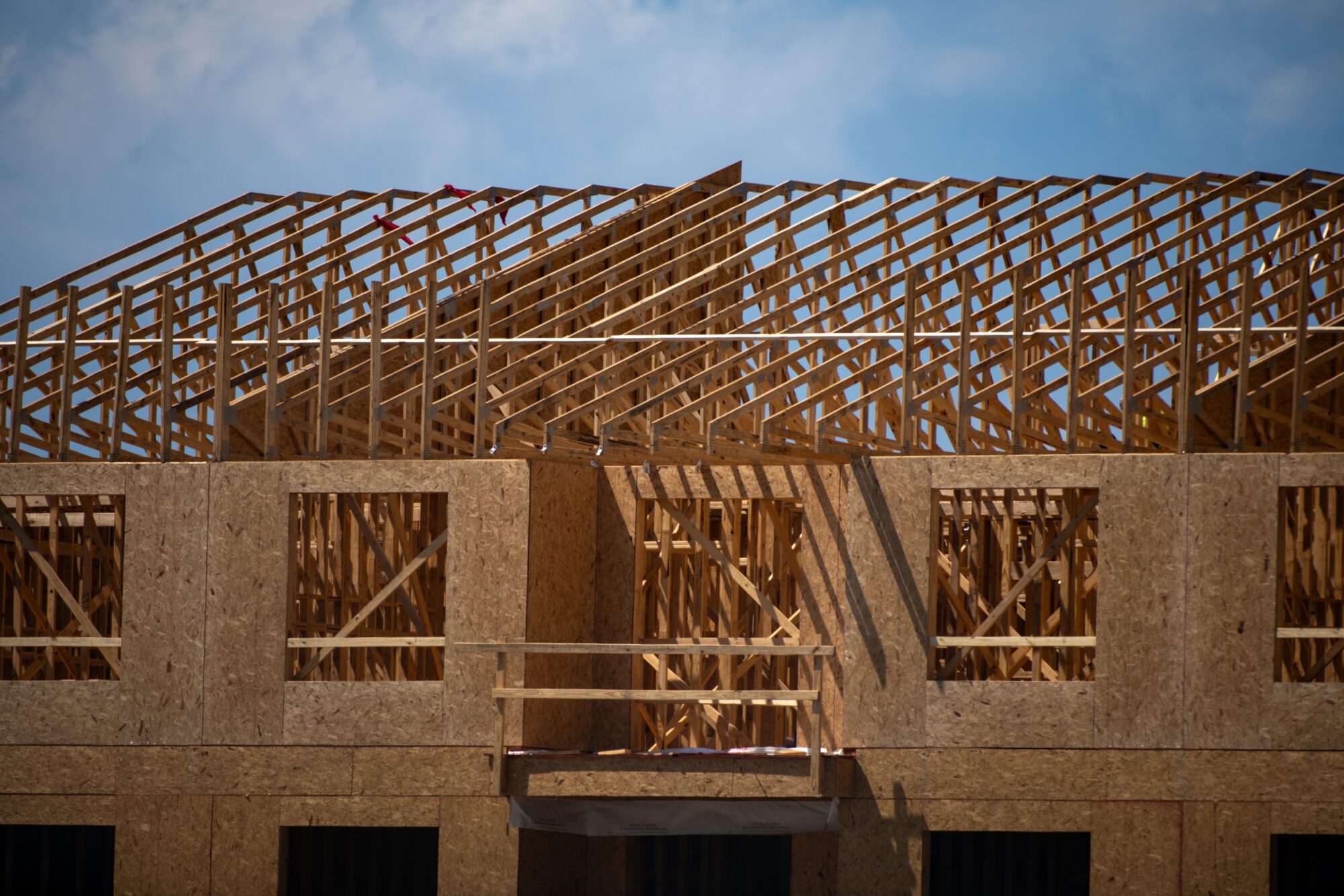


A leading natural capital investor has urged Greater Manchester Mayor Andy Burnham to place British-grown timber at the centre of future council housebuilding programmes. In an open letter, Richard Kelly, Managing Director at Foresight, argues that using homegrown timber in new housing developments could help address housing shortages while strengthening the UK’s forestry sector, supporting economic growth and reducing carbon emissions.
Kelly proposes a “homes from homegrown timber” strategy, suggesting that committing a substantial proportion of new council homes to timber construction would create long-term demand for domestic timber. This, in turn, could encourage investment across the forestry supply chain, from woodland creation to timber processing and manufacturing. He argues that housing and forestry policies should be aligned, noting that homes built in future decades could be supplied by forests planted today.
In his letter, Kelly highlights five key benefits of adopting a timber-led housebuilding programme. He states: “Prime Minister, this programme can be more than a housing policy: it can also be a forestry, industrial, health, resilience and growth strategy.
“Build homes. Grow forests. Create jobs. Enhance lives. The result could be one of the most compelling examples of joined-up government, Britain has seen in a generation.
“The opportunity is clear. The economics are increasingly compelling. With the right policy choices, Britain can deliver homes, jobs, forests, resilience and lower-carbon growth through a single national programme. I would welcome the opportunity to discuss how this ambition can be turned into practical policy.”
The letter also points to growing evidence that timber-rich interiors can improve wellbeing and reduce stress, suggesting that greater use of visible wood in council housing could contribute to better health outcomes, particularly in communities affected by poor-quality housing.
Kelly further argues that modern timber-frame and off-site construction methods can be delivered more quickly than traditional masonry construction, which could help accelerate housing delivery if government targets are to be met. He also emphasises timber’s environmental advantages, highlighting its ability to store carbon and reduce embodied emissions compared with conventional materials such as steel and concrete. New timber homes could therefore act as long-term carbon stores.
Finally, he stresses the potential economic benefits of expanding domestic timber use, including support for jobs in forestry, sawmilling, engineered timber production, modular construction and manufacturing across rural and industrial regions. Referring to international examples such as France, he suggests that public procurement can be used strategically to stimulate market growth and strengthen national timber supply chains.
Summarising the wider opportunity, Kelly writes: “The real opportunity is not simply planting more forests. It is rebuilding Britain’s timber supply chain through sawmills, engineered timber manufacturing, modular construction facilities and modern methods of construction.
“Every pound spent on imported materials supports jobs overseas. Meanwhile, every pound spent on homegrown timber supports UK jobs. Forestry jobs. Sawmill jobs. Manufacturing jobs. Construction jobs. Jobs throughout the entirety of the nation which bring growth to local and rural communities.”