

As we approach 2026, the conversation around glulam versus steel in construction continues to evolve. Robin Nicholson, Managing Director at Buckland Timber, outlines some of the drivers to timber adoption.
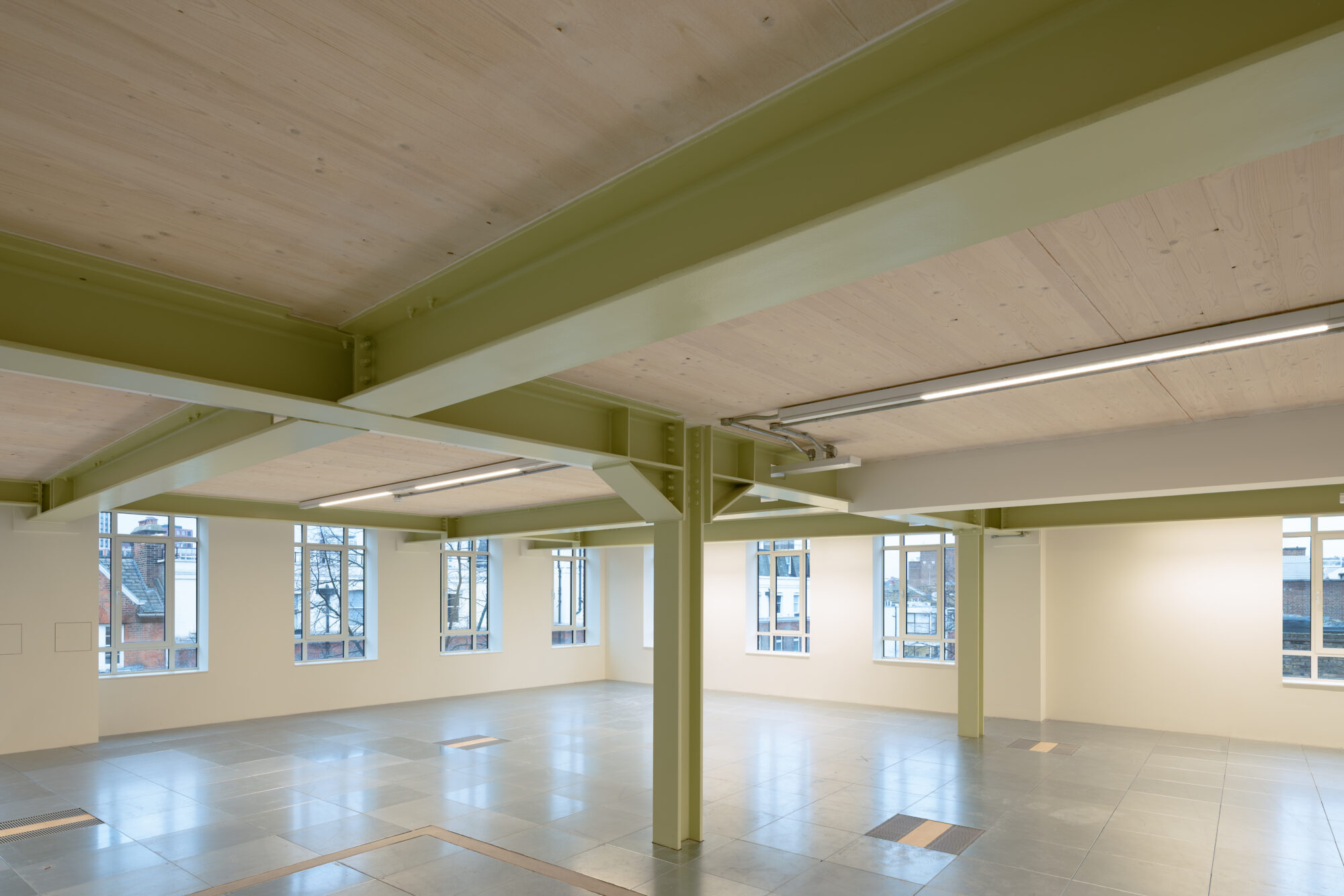
At Buckland Timber, we’re often asked why clients choose glulam over steel, or whether we can offer a viable glulam alternative to a steel design. While sustainability is undoubtedly growing in importance, I’d be lying if I said carbon footprint is the primary reason clients come to us. Aesthetics and the creation of inspiring working environments remain the biggest factors. There’s something about exposed timber that transforms a space – it’s not just about how it looks, but how it makes people feel. The wellbeing benefits of natural materials in our built environment are increasingly recognised, and that’s often what initially tips the scales towards glulam, that and the ‘statement structure’ factor.
A cost comparison
There’s a persistent perception that glulam is significantly more expensive than steel, which isn’t always the case. Taking a simple beam with no fabrication, a typical 6m beam – a 254 x 146 x 37 UB steel section costs £200-£300 based on recent pricing, while an equivalent 180 x 360 glulam beam sits in the £250-£300 range. The upfront material costs are quite similar.
For fabricated structures, the picture is a bit different – a portal frame shed in steel typically costs around £125 per square metre. Our most budget-friendly glulam options come in at £150-£200 per square metre. Yes, it is more, but the margin’s far narrower than many assume. Where glulam gains ground over steel is in the ‘hidden’ costs. Steel beams typically require additional site work – boarding over, adding joists, and crucially, fire protection coatings. Glulam has its own inherent fire rating and is easier to cut and work with on-site, plus if you opt for locally grown timber, you cut down on transportation costs. These factors can narrow or even reverse any initial price gap.
The policy landscape
Of course, even with cost certainty, broader policy signals can shape whether clients feel confident choosing timber over steel, which leads me to the Timber in Construction Roadmap. It is welcome and well-intentioned, promoting timber for its carbon storage benefits, linking it to the 1.5 million homes target, and more encouraging timber in offsite construction.
However, I remain pragmatic about its short-term impact. The Roadmap operates through policies, standards and guidance rather than mandates or direct financial grants or subsidies for timber construction projects. There are no penalties for choosing steel or masonry over timber, and no financial disincentives for high-carbon material choices. Without meaningful regulatory teeth, I don’t expect dramatic market shifts in 2026. The direction of travel is positive, but the pace of change will be gradual.
There are also questions about the long-term supply chain. Some foresters are concerned that the emphasis on biodiversity may have swung too far, potentially undermining the future industry by not planting enough of the species we need for construction – i.e. spruce and Douglas fir. If we want to genuinely increase our use of homegrown timber, we need to ensure we’re planting for that future now.
Making glulam work
Glulam isn’t new – there was plenty used in the 1980s – but it’s experiencing a resurgence alongside other engineered timbers. Increasingly, we’ve seen projects adopt a combination of several materials working together to achieve their goals – our role is to help them with our knowledge and expertise to turn that idea into a reality. That means providing clear, early-stage information on feasibility, cost, and performance.
It means helping clients understand glulam isn’t just for special-case projects but can be cost-competitive with steel, particularly when you factor in the whole-life picture. Whether a client’s primary motivation is aesthetic, financial, or environmental – or a combination of all three – we aim to provide the confidence to make informed material choices. When comparing glulam to steel, it’s important to avoid all-or-nothing thinking. Most of our glulam structures incorporate steel fixings, connections, and complementary elements. Successful projects blend glulam, CLT, steel, and other materials where each makes sense. The key is keeping an open mind to the possibilities and engaging with your design team and contractors early to create the best possible project. The shift towards greater timber use is already underway. Yes, 2026 won’t see a revolution, but we’re excited to see real momentum building: more confident clients, increasingly competitive costs, maturing homegrown supply chains, and a growing body of successful projects proving what’s possible. As the policy environment evolves to properly value low-carbon materials, glulam is moving from an alternative option to a genuine mainstream choice.
It still surprises me how often people don’t realise glulam is a viable alternative to steel or know where to start with it. Of course, I am going to say this, but if you have any questions, we’re always happy to run through the feasibility and costings at the early stages before you commit to a full design. The more these conversations happen, the more options become available to everyone and that can only strengthen the whole industry.